
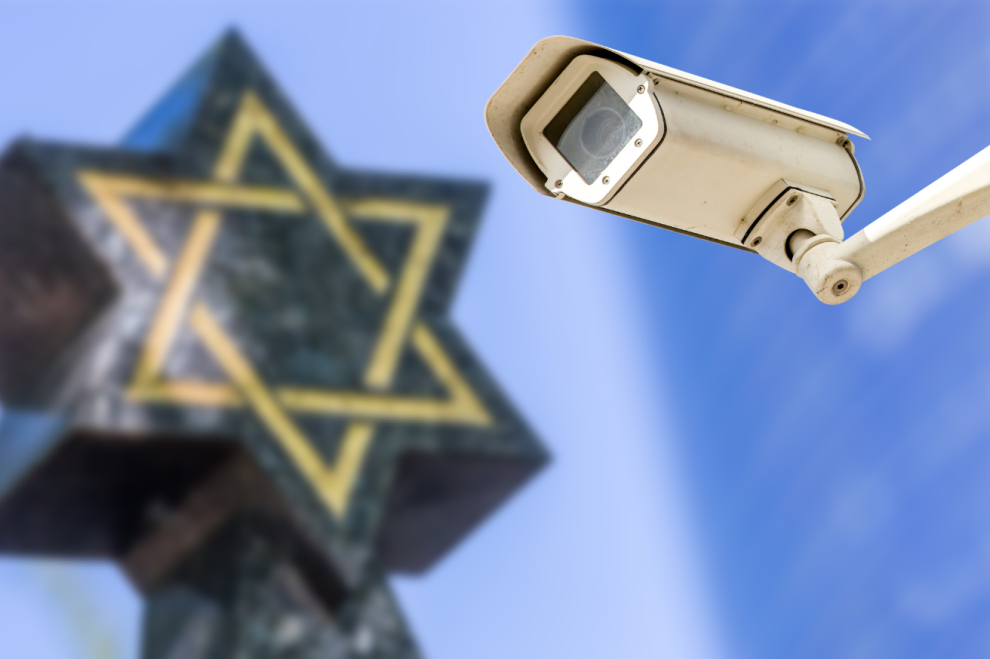
Following Thursday’s targeted violent attack at Temple Israel in West Bloomfield, Michigan, Jewish Federations of North America joined the Secure Community Network (SCN), the official safety and security organization for the Jewish community in North America, and the Major County Sheriffs of America (MCSA) in hosting an after-action review and national threat briefing in partnership with other major law enforcement groups.
The briefing drew 2,600 participants, including law enforcement and security professionals as well as members of the Jewish community. Attendees received an update on the latest developments, the evolving threat environment, and key security considerations for Jewish communities.
“We are grateful to law enforcement, the security professionals, and SCN for their critical role in protecting the Jewish community. Security spending in the Jewish community is well over $765 million, and it is unsustainable to think that philanthropy alone can cover this cost," said Eric Fingurgut, President and CEO. "Government must act, which is why we are calling to increase Nonprofit Security Grant Program funding to $1 billion and ensure that these funds can be used to pay for security guards, which at Temple Beth Israel proved instrumental in keeping the students and synagogue staff safe.”
Presenters noted that the after-action review of Temple Israel’s response demonstrated that prior investments in training, layered security measures, and law enforcement coordination were central to a positive outcome, directly contributing to lives saved. These measures enabled the synagogue to respond swiftly and safely, including through established lockdown and evacuation procedures.
“Because of years of work by the Detroit community, led by Federation leadership, dedicated security professionals, and local institutions, the community was well prepared. Training had been conducted, security protocols were in place, and strong relationships with law enforcement had been built. These partnerships made a real difference and helped ensure that the outcome was very different from what it might otherwise have been,” said Gary Torgow, Chair of the Jewish Federation of North America.
Officials also emphasized that security risks for Jewish communities remain elevated, particularly in light of ongoing operations targeting the Iranian regime. In the five days following Operation Epic Fury, SCN observed more than 8,200 violent online threats, the highest number ever recorded over a five-day span, many of which included direct calls for violence against Jewish facilities.
“Yesterday, we saw an individual intentionally target a Jewish facility with over 125 children inside with the intent to murder members of our community. The congregation’s prior investments in security, emergency planning, and training — as well as coordination with law enforcement — averted what could have been an immense tragedy,” said Michael Masters, SCN National Director & CEO. “This incident shows that visible and capable security that is embedded as part of the community can be essential to protecting the Jewish community. It also demonstrates that we, as a Jewish community, will not be stopped by terrorist cowards; we will stand even stronger and with greater pride and courage.”
Following strikes by the United States and Israel on the Islamic Republic of Iran, Jewish Federations of North America, SCN, ADL (Anti-Defamation League), Community Security Service (CSS), and Community Security Initiative (CSI) of New York, recommended that Jewish communities across North America remain vigilant and maintain heightened security measures.
This group recommends that communities reemphasize the previously released Eight Best Practice Recommendations (below).
Eight Best Practice Recommendations:
- Ensure awareness and coordination with law enforcement and the Jewish Community Security Initiative and/or security professionals servicing your community or region
- Extend the protections or security of your event’s/facility’s perimeter as far as possible
- Open events only to identifiable individuals and pre-screened invitation lists (e.g., no mass emails to the broad public)
- Require registration and verification of registrants for events open to the public
- Provide details of location, time, and other information only upon confirmed registration
- Allow access control (locks and entrance procedures) to known, confirmed registrants/attendees into the facility/event
- Remain vigilant and report suspicious activity
- Add armed on-duty or off-duty law enforcement, private security, and/or volunteer teams as additional layers of protection wherever possible
0Comments
Add CommentPlease login to leave a comment